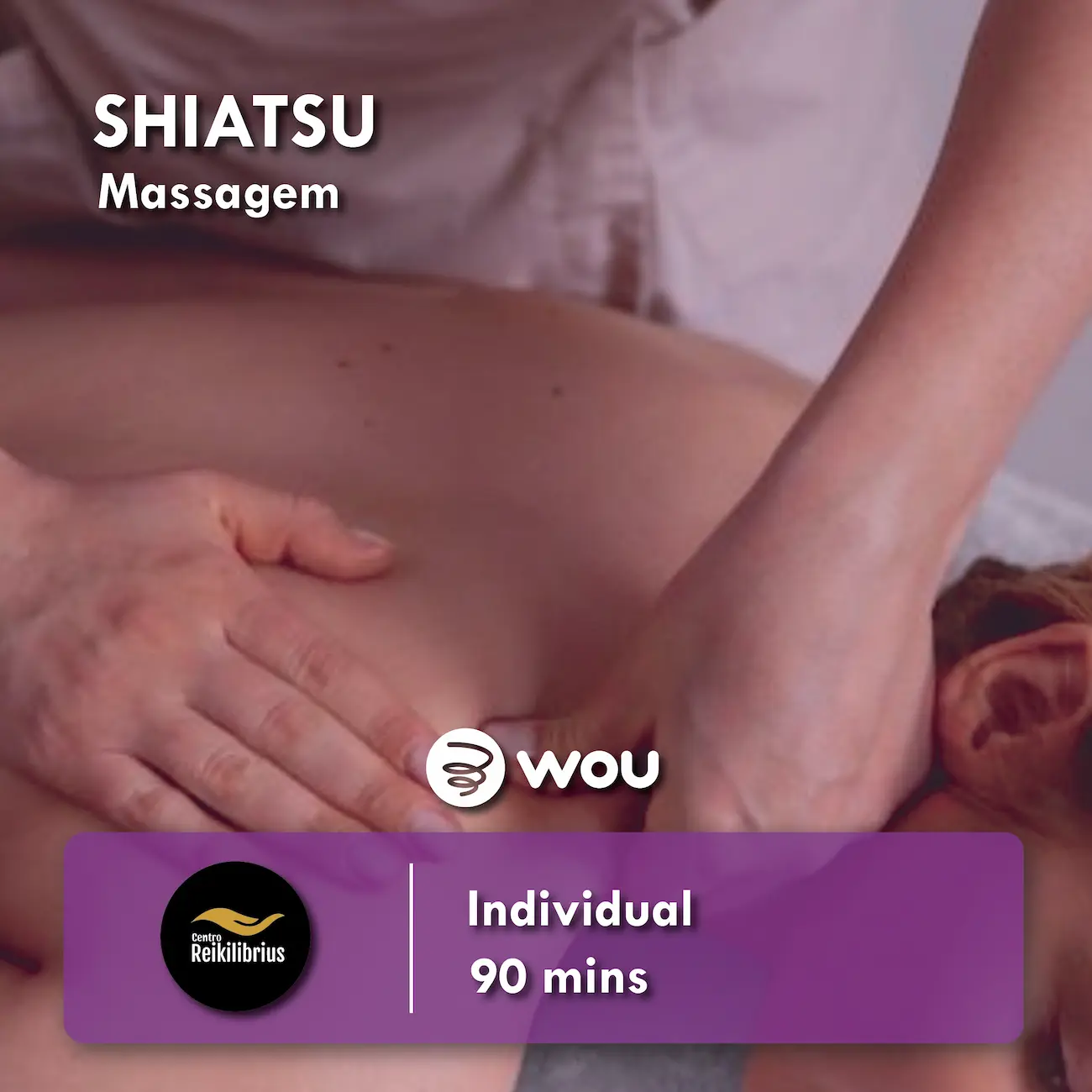
Unlock your well-being with the ancient power of Shiatsu.
Shiatsu is a Japanese manual therapy based on the principles of traditional Oriental medicine to promote health and well-being. This technique uses controlled pressure from the thumbs, fingers, and palms on specific points (meridians), aiming to release energetic blocks and restore the natural flow of vital energy (Ki).
Unlike Western massages that focus primarily on soft tissue manipulation, Shiatsu works deeply on the nervous system and internal organs, treating the body as an interconnected whole. It is an approach that not only relieves physical symptoms but also promotes profound mental clarity and emotional stability.
Main Benefits
- Tension and Pain Relief: Effective for headaches, migraines, back pain, and chronic muscle tension
- Nervous System Regulation: Combats stress, anxiety, and insomnia, promoting deep relaxation
- Improved Circulation and Immunity: Stimulates blood and lymphatic flow, helping eliminate toxins and strengthen the body's defenses
- Digestive and Hormonal Health: Helps regulate internal functions and relieve discomforts such as menstrual pain or slow digestion
Duration
- 1h30 session
Methodology
- Rhythmic pressure technique and gentle stretching performed in a serene environment, adapted to each participant's physical condition.
Price Includes
- Full Shiatsu Massage session (90 minutes)
About Centro Reikilibrius
Standing out as a refuge of Well-Being and Beauty located in Aveiro, here you will find a dedicated team offering care, courses, and workshops focused on physical, mental, and emotional balance. This welcoming and professional space guarantees a unique and personalized experience, where you will feel welcomed and cared for.
More Information
If you have anything else send us a whatsapp message on this issue link.
Contact WOU: 918 136 805
1. Is it necessary to remove clothing for the Shiatsu session?
A: Traditionally, Shiatsu is performed over light and comfortable clothing, preferably cotton, which allows for freedom of movement and the application of pressure on the meridians. Unlike Western massages, the use of oils is not mandatory, although the technique can be adapted in a studio context if the participant prefers.
2. Is the pressure applied during Shiatsu painful?
A: The pressure can be felt as intense, especially in areas where the flow of energy (Ki) is blocked or where there is a greater accumulation of muscle tension. However, the intensity is communicated and adjusted by the technical team to each person's comfort threshold, transforming initial discomfort into a sensation of release and deep relief.
3. What is the main difference between Shiatsu and a common therapeutic massage?
A: While therapeutic massage focuses on musculoskeletal anatomy and soft tissue manipulation, Shiatsu is based on energetic anatomy. The focus is on balancing meridians and acupressure points to treat the body as an interconnected system, positively influencing internal organs and the emotional state.
4. Are there any contraindications for this therapy?
A: Yes. Shiatsu is not recommended in cases of fever, acute infectious diseases, recent fractures, advanced osteoporosis, or severe inflammation. In the case of pregnant women, or individuals with heart or oncological conditions, it is essential to inform the technical team beforehand so the session can be properly adapted to specific health conditions.
5. Does Shiatsu help treat insomnia and anxiety issues?
A: Yes. By acting directly on the nervous system through rhythmic and deep pressure, Shiatsu induces a parasympathetic relaxation state. This helps reduce cortisol levels (the stress hormone), facilitating more restorative sleep and greater emotional stability.
6. How many sessions are recommended to experience long-lasting benefits?
A: Although tension relief and the feeling of well-being are immediate after the first session, for chronic issues or maintenance of energetic balance, a bi-weekly or monthly regularity is recommended.